Definition
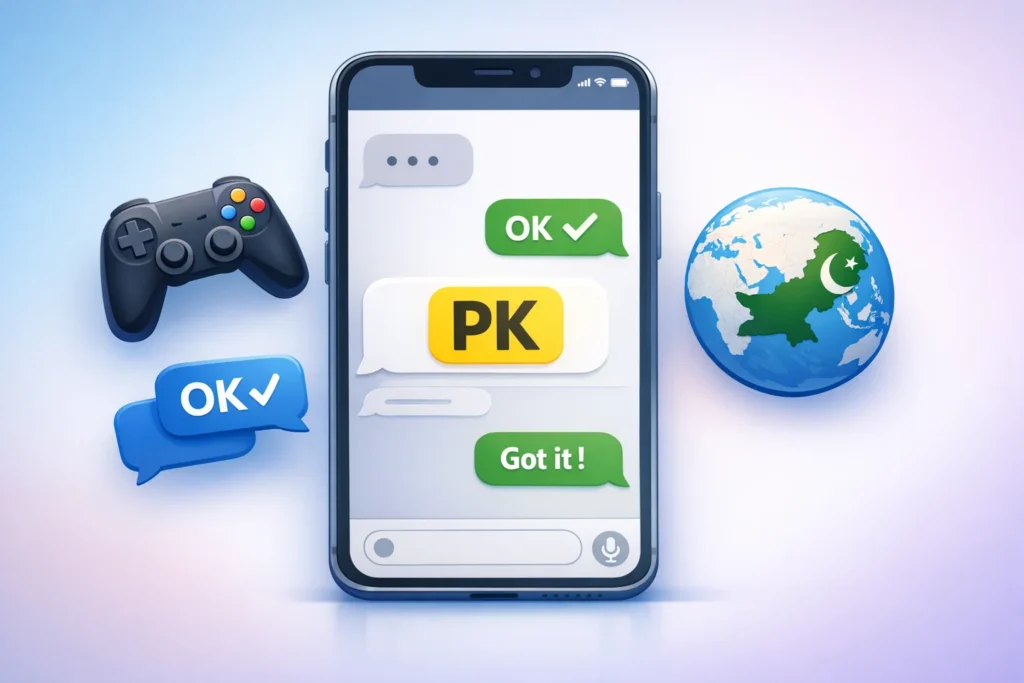
PK in text means “OK,” “Player Kill” in gaming, or “Pakistan,” depending on context. In everyday chatting, it is often used as a casual or shortened way of saying “okay” or “fine,” while in gaming it refers to defeating another player, and in geography or identity contexts it can refer to the country code for Pakistan.
If you’ve ever received a message like “pk 👍”, “we are pk”, or seen “PK” in gaming chats, you probably paused for a second and wondered what does PK actually mean?
The truth is, PK is a short abbreviation with multiple meanings, and its interpretation depends heavily on context. That’s why it shows up in casual texting, online gaming, social media conversations, and even international references.
In this guide, we’ll break down what PK means in text, how it’s used, where it came from, and how you can understand it instantly in any conversation.
Meaning of PK in Text
The abbreviation PK has several common meanings in digital communication:
1. PK = “OK” or “Alright” (Casual Chatting)
In informal texting, PK is sometimes used as a quick shorthand for:
- OK
- Okay
- Fine / agreed
It is more common in South Asian texting styles, where users shorten expressions for speed.
Example:
- A: “Meet at 5?”
- B: “pk 👍”
👉 Meaning: “Okay, that works.”
2. PK = Player Kill (Gaming Term)
In online multiplayer games, PK stands for Player Kill, meaning:
- Defeating another real player
- Engaging in PvP (Player vs Player combat)
Example:
- “He got PK’d in the battle zone.”
👉 Meaning: The player was killed by another player.
3. PK = Pakistan (Country Code)
In international usage, PK is the ISO country code for Pakistan.
Used in:
- Websites
- Shipping addresses
- Country selection menus
- Travel documents
Example:
- “Shipping available to PK”
👉 Meaning: Shipping available to Pakistan
Origin and Popularity of PK in Texting
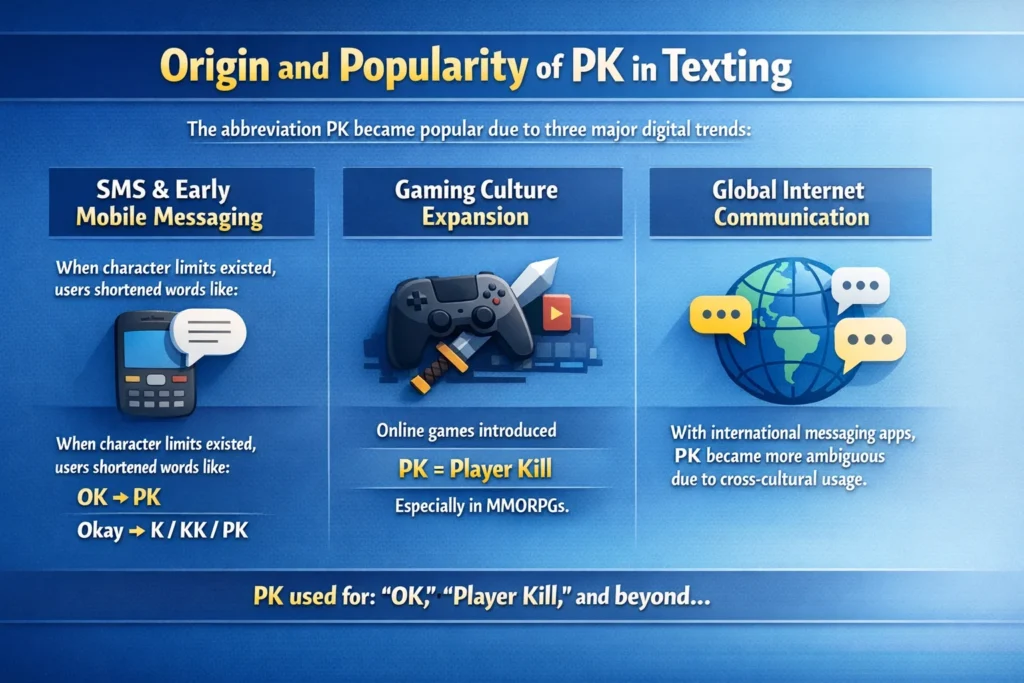
The abbreviation PK became popular due to three major digital trends:
1. SMS and Early Mobile Messaging
When character limits existed, users shortened words like:
- OK → PK (informal variation in some regions)
- Okay → K / KK / PK
2. Gaming Culture Expansion
Online games introduced PK = Player Kill, especially in MMORPGs (Massively Multiplayer Online Role-Playing Games).
3. Global Internet Communication
With international messaging apps, abbreviations like PK became more ambiguous due to cross-cultural usage.
How PK Is Used in Real Conversations
Let’s break down how PK appears in different communication styles:
Casual Chatting
- “pk I will come”
- “pk done”
- “pk 👍”
👉 Tone: Friendly, neutral, quick agreement
Gaming Chats
- “He PK’d me twice!”
- “Be careful of PK players in this zone.”
👉 Tone: Competitive, intense, action-based
Formal / Informational Context
- “Deliver to PK”
- “Server location: PK”
👉 Tone: Neutral, technical
Examples of PK in Different Contexts
Here’s a clear breakdown of how meaning changes with usage:
| Context | Example Sentence | Meaning of PK | Tone |
|---|---|---|---|
| Texting | “pk I’m coming” | Okay / agreed | Casual |
| Chat | “Are you ready?” “pk” | Alright | Neutral |
| Gaming | “He got PK’d” | Player Kill | Competitive |
| Shipping | “Available in PK” | Pakistan | Formal |
| Social media | “pk done 👍” | Okay / confirmed | Friendly |
PK vs Other Common Chat Abbreviations
To understand PK better, compare it with similar texting shortcuts:
Difference PK vs OK
- OK: Standard, universally understood
- PK: Informal, regionally influenced
Comparing PK vs KK
- KK: “Okay okay” (common in Western texting)
- PK: Less common, more context-based
PK vs K
- K: Very short acknowledgment (can feel cold)
- PK: Slightly more expressive in some cultures
Alternate Meanings of PK
Besides chatting, PK has several widely recognized meanings:
1. PK = Player Kill (Gaming)
Used in PvP games like MMORPGs.
2. PK = Pakistan
Official country abbreviation.
3. PK = Public Key (Technology)
In cybersecurity:
- Public Key encryption (PKI systems)
4. PK = Primary Key (Databases)
In computer science:
- Unique identifier in a database table
5. PK = “Pakka” (Informal South Asian slang influence)
In some informal texting:
- “Pakka” means confirmed or sure
- Sometimes shortened to PK
When Should You Use PK in Text?
Using PK is not always appropriate. Here’s a quick guide:
Good situations:
- Casual conversations
- Friendly chats
- Quick confirmations
- Gaming discussions
Avoid using PK when:
- Talking in formal emails
- Professional communication
- Academic writing
- Customer service replies
Polite or Professional Alternatives to PK
If you want to sound clearer or more professional, use:
- “Okay”
- “Understood”
- “Confirmed”
- “Sounds good”
- “Alright, thank you”
These are safer in workplace or formal settings.
Why PK Can Be Confusing in Texting
PK is confusing because:
- It has multiple meanings
- It depends heavily on context
- It varies by culture and platform
- It is not a standardized global abbreviation
So, always read the surrounding message before interpreting it.
FAQs
1. What does PK mean in chatting?
PK usually means “okay” or agreement in casual chats.
2. Is PK the same as OK?
Not exactly. PK is an informal variation, while OK is standard.
3. What does PK mean in gaming?
In gaming, PK means “Player Kill,” referring to defeating another player.
4. What does PK stand for in country codes?
PK is the international abbreviation for Pakistan.
5. Is PK rude in texting?
No, but it can feel too short or informal in serious conversations.
6. Why do people use PK instead of OK?
Mostly for speed, habit, or regional texting styles.
7. What does PK mean on social media?
It usually means “okay” or can depend on gaming or context-based usage.
8. Can PK have technical meanings?
Yes, in IT it can mean Public Key or Primary Key depending on context.
Conclusion
The abbreviation PK in text is highly context-dependent, making it one of the more flexible chat terms online. It can mean:
- OK / agreed in casual texting
- Player Kill in gaming
- Pakistan in global or technical references
To understand PK correctly, always look at the conversation style, platform, and surrounding words. When in doubt, assume context first before meaning.
Discover More Related Articles:

Sarah Williams is the passionate author behind WordNexy.com, dedicated to creating content that informs, inspires, and sparks curiosity. With a love for words and storytelling, she transforms ideas into meaningful articles that educate, entertain, and leave a lasting impression on every reader.